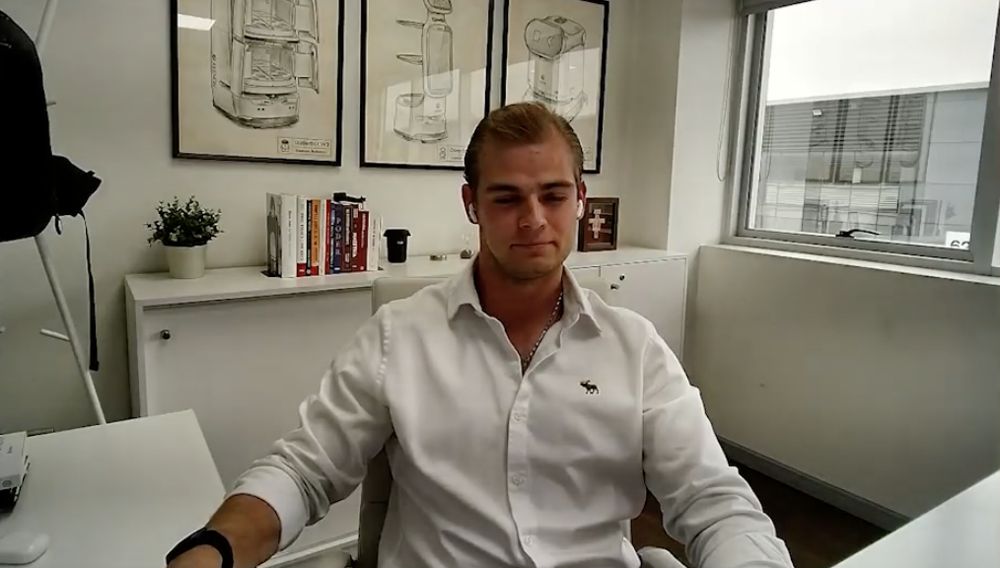
“Now I'm leading a line inside my family's company, where we sell autonomous cleaning robots here in Chile.”Luciano
Before
Luciano always wanted a business of his own. At university in Chile he felt trapped, and between classes he and a friend kept asking each other how they could get off the path in front of them. Neither of them knew where to start, and he was too shy to even talk to people he didn't know. Then, one week, studying for a brutal math exam, he realized it wasn't going anywhere and would never help him.
Why he joined
He'd seen reviews of The Real World online, and when the feeling of being stuck got bad enough, he tried it for a month. What convinced him was how focused the courses were, step by step with no fluff. The first time he logged in, he says he felt pure adrenaline: every business model was there, and he felt he could do anything with it. The professors teaching them even answered his questions.
The hard part
The hard part was living two lives at once. He and his friend stayed full-time students, kept their grades up and built on the side. They started with an online store, then jumped from idea to idea and barely moved for a year and a half. Progress only came when each of them committed to one business. They organized every hour, and they even worked on it in class while the professor was talking.
What he built
He chose Professor Arno's Business Mastery campus and started a marketing agency, while his friend went into social media. A friendly race over who would get ahead first kept both of them working harder. Outreach and client calls forced him out of his shyness every day. One of his clients was his father's company. When the results came in, his father asked him to join the company, and made clear he'd get no special treatment for being his son, because that would hurt him in the long run.
What he'd tell you
Today Luciano leads his own line in the family company and has built his own team. He says almost everything he knows about business came from The Real World: marketing, automation, and how to build relationships where both sides win. His advice is simple. Look inside before you judge it, pick one business model and stick to it, because jumping around cost him a year and a half.